
Researchers from the SPM4.0 consortium actively participated in the International Conference on Scanning Probe Microscopy (ISPM 2026), held from 26 to 29 May in Genoa, Italy. The project was represented through an invited talk, two oral presentations and a poster, showcasing recent advances in artificial intelligence, nanoscale bioelectrical characterization and BioAFM data analysis.
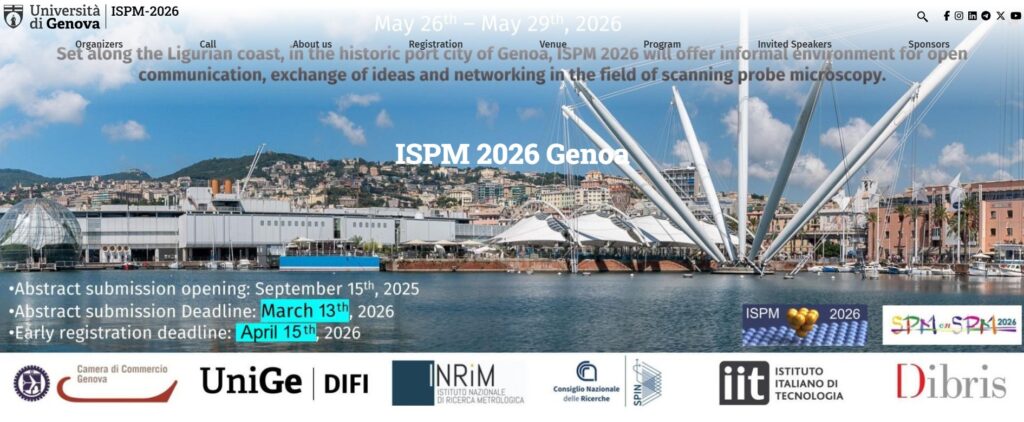
ISPM is one of the leading international conferences dedicated to Scanning Probe Microscopy (SPM) and its applications across physics, materials science, nanotechnology, biology and medicine. The 2026 edition brought together researchers from around the world to discuss the latest developments in atomic force microscopy, near-field techniques, machine learning for microscopy, nanoscale imaging and the characterization of biological systems. The conference placed particular emphasis on emerging methodologies combining SPM with artificial intelligence and on innovative applications in life sciences.
SPM4.0 was strongly represented at the meeting through contributions from researchers and doctoral candidates working at the intersection of advanced microscopy, biophysics and data science. In addition, Petr Klapetek, Senior Researcher at the Czech Metrology Institute (CMI) and supervisor of SPM4.0 doctoral candidate Gabriele Gradara, was part of the International Advisory Board, contributing to the scientific direction and organization of the conference.
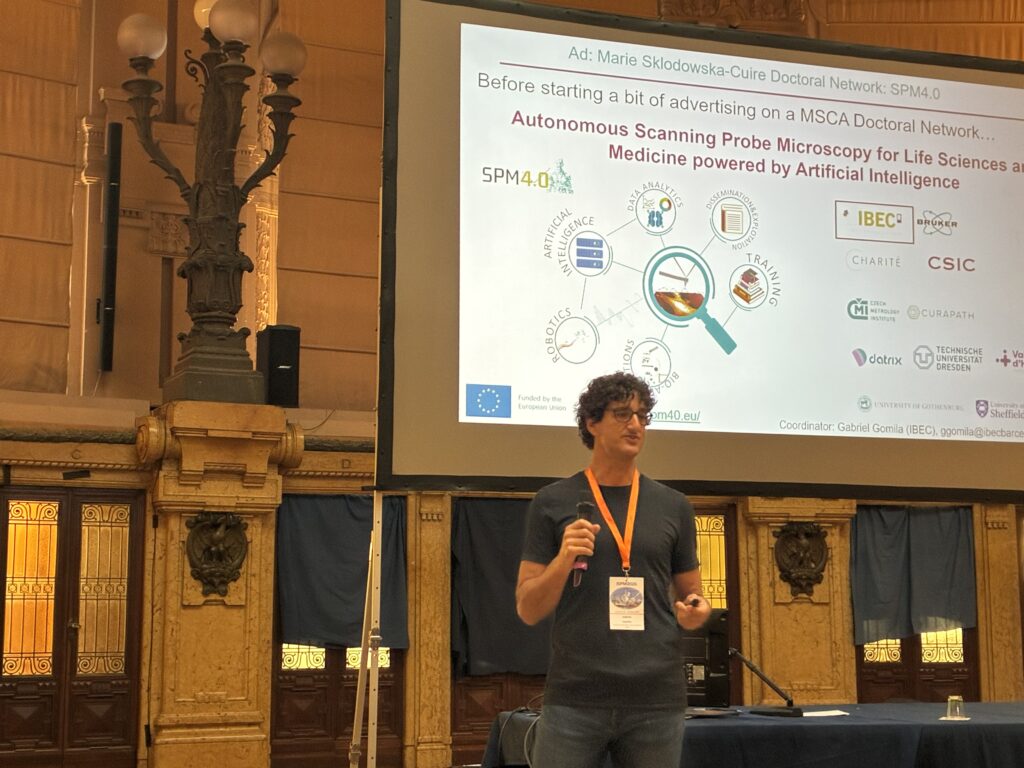
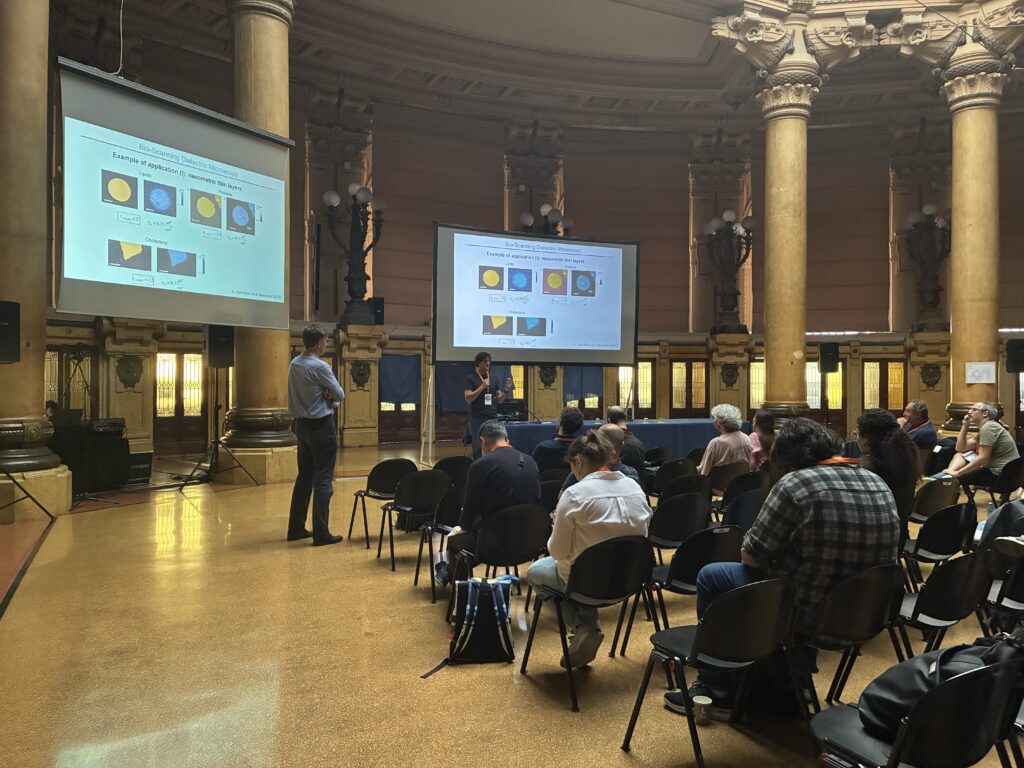
One of the highlights of the conference was the invited lecture delivered by Gabriel Gomila, leader of the Nanoscale Bioelectrical Characterization Group at IBEC and coordinator of the SPM4.0 project. His talk, “Scanning Dielectric Microscopy Enhanced by Artificial Intelligence”, was presented during the session AI and Novel SPM Methodologies.
In his presentation, Gabriel Gomila discussed recent advances in Scanning Dielectric Microscopy (SDM), a quantitative SPM technique capable of mapping the dielectric constant and conductivity of highly heterogeneous samples with nanoscale resolution. He described how SDM has been successfully applied to a wide range of biological and nanomaterials systems, including molecular layers, nanoparticles, viruses, bacteria and eukaryotic cells. A major challenge in SDM, however, is the extensive computational effort required for quantitative data analysis, which traditionally relies on finite element simulations and may take months to complete. Gomila presented how machine learning approaches dramatically reduce these computational times—from months to seconds—while preserving quantitative accuracy. He also outlined ongoing efforts to develop AI-based methods capable of replacing numerical simulations altogether, paving the way towards fully automated, real-time dielectric mapping at the nanoscale.
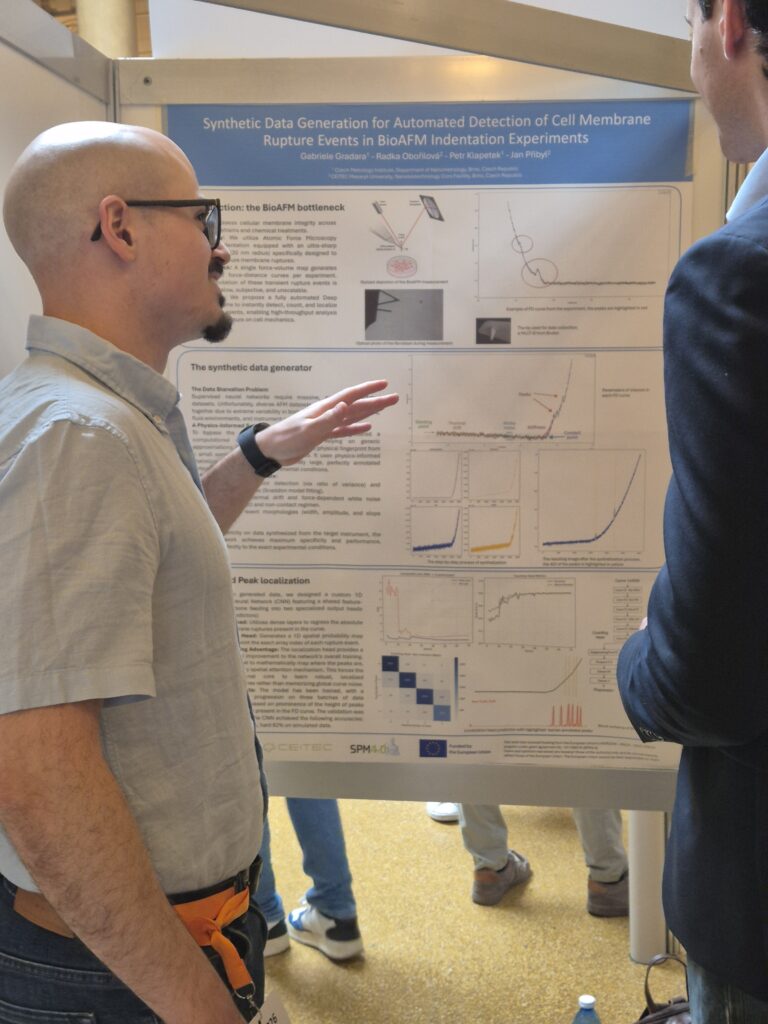
SPM4.0 doctoral candidate Gabriele Gradara, based at the Czech Metrology Institute under the supervision of Petr Klapetek, presented a poster entitled “Synthetic Data Generation for Automated Detection of Cell Membrane Rupture Events in BioAFM Indentation Experiments”.
His work addresses one of the main bottlenecks in applying machine learning to BioAFM datasets: the need for large quantities of manually annotated data. Gabriele presented a computational framework capable of generating synthetic AFM force curves that reproduce the statistical characteristics of experimental measurements. These synthetic datasets can be used to train neural networks for the automatic detection of cell membrane rupture events, enabling high-throughput analysis of cellular responses to drugs and biochemical treatments while significantly reducing manual annotation efforts.
The conference also featured oral presentations by two other researchers from the Nanoscale Bioelectrical Characterization Group at IBEC.
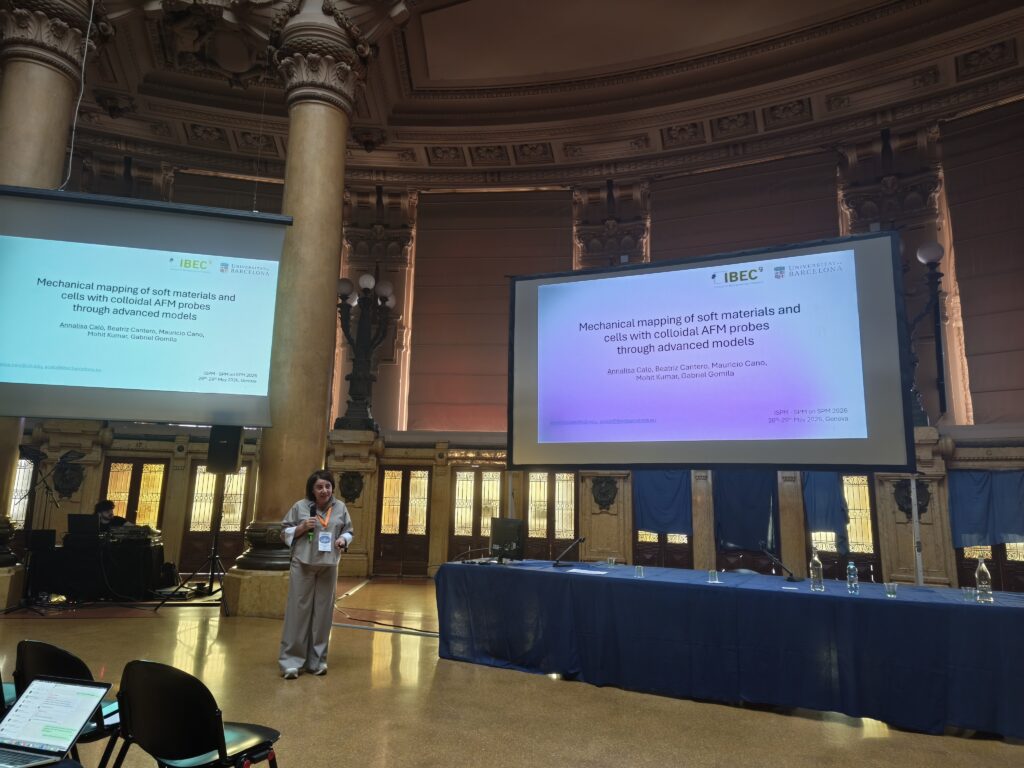
Annalisa Caló presented her work “Mechanical Mapping of Soft Materials and Cells with Colloidal AFM Probes through Advanced Models” during the session SPM in Cells and Multicellular Systems. Her talk focused on the development of an analytical model that accurately accounts for bottom-contact effects when using spherical colloidal probes to characterize very soft materials and living cells.
The new model has been experimentally validated in hydrogels and macrophages and has been integrated into Mechanotool, a software platform designed for automated, on-the-fly analysis of AFM data. The tool incorporates automated data import, force-curve preprocessing and substrate recognition, bringing researchers closer to high-throughput quantitative mechanical phenotyping of cells.
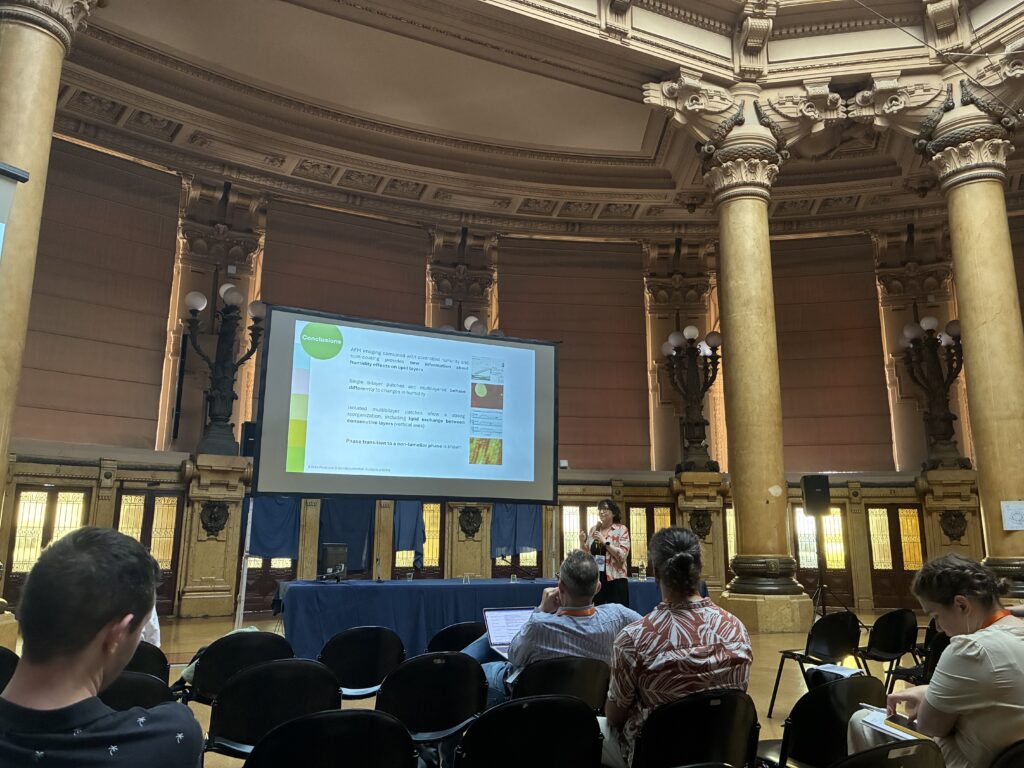
In addition, Aurora Dols-Pérez presented her research during the session SPM on Model Biological Systems, further highlighting the broad expertise of the IBEC group in applying advanced scanning probe microscopy techniques to biological systems and strengthening the visibility of SPM4.0 within the international SPM community.
The participation of SPM4.0 researchers at ISPM 2026 demonstrates the project’s strong commitment to scientific excellence and interdisciplinary innovation. Through contributions spanning artificial intelligence, bioelectrical characterisation and advanced BioAFM methodologies, the consortium continues to push the boundaries of scanning probe microscopy while fostering collaborations within the international scientific community. Events such as ISPM provide an invaluable platform for sharing knowledge, showcasing emerging technologies and reinforcing SPM4.0’s role in training the next generation of experts in nanoscale biomedical imaging.