
On 13–17 April 2026, the SPM4.0 consortium gathered at the Instituto de Ciencia de Materiales de Madrid (ICMM-CSIC), Spain, for the project’s Month 18 Network Meeting and the Second SPM4.0 Training Workshop. The event brought together doctoral candidates, supervisors and external researchers for a week of scientific exchange, progress assessment and advanced training in scanning probe microscopy (SPM), machine learning and FAIR data management.
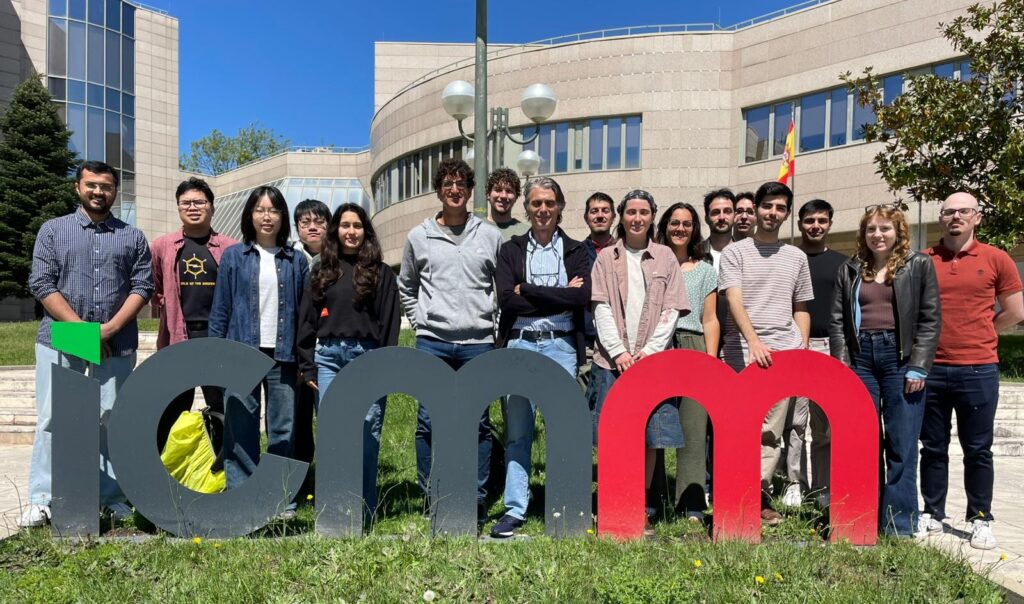
Hosted by Ricardo Garcia at the ICMM-CSIC in Madrid, the meeting marked an important milestone in the implementation of the SPM4.0 doctoral network. The first day was dedicated to the reviewing the scientific progress achieved during the first 18 months of the project, with doctoral candidates (DCs) presenting updates on their individual research projects and discussing future objectives with supervisors and consortium partners. The meeting also included discussions on upcoming deliverables, milestones, secondments, exploitation activities and preparations for the next technical reporting period, ensuring continued alignment across the consortium.
The M18 Network Meeting brought together all 15 SPM4.0 DCs alongside supervisors and project partners participating both in person and online. Throughout the first day, the DCs presented their latest research results, highlighting the multidisciplinary nature of the project and the progress made across the different scientific work packages. The presentations were followed by discussions that provided valuable feedback and fostered collaboration among beneficiaries and partner organisations.
Following the network meeting, participants attended the Second SPM4.0 Training Workshop, which combined theoretical lectures open to the wider scientific community with hands-on practical sessions reserved for SPM4.0 DCs.
The first two days focused on Advanced Scanning Probe Microscopy and Biophysics, covering quantitative functional nanoscale imaging and the mechanical and electrical properties of biological samples. Participants explored topics such as nanomechanical mapping, nanoelectrical characterisation, rheology, deformability cytometry and advanced AFM methodologies. Practical laboratory sessions enabled students to gain direct experience in AFM imaging and data analysis.
The workshop featured lectures by internationally recognised experts. Ricardo García (ICMM-CSIC), a leading researcher in atomic force microscopy and nanomechanical imaging, delivered several sessions on nanomechanical and nanoelectrical mapping as well as advanced AFM techniques. Jakub Zemła (IFJ PAN), whose research focuses on the mechanical characterisation of cells and tissues using multiscale approaches, introduced participants to adhesion force measurements and rheological analysis of biological samples.
On the second day, Gabriel Gomila (IBEC), an expert in nanoscale electrical characterisation and scanning probe microscopy, presented advanced approaches for nanoelectrical mapping of soft biological samples. He focused his lecture on bioelectronics and microsystems for biomedical applications, exploring electrical properties of biological systems using AFM and complementary techniques.
The third day of the workshop was dedicated to Machine Learning and Deep Learning in Microscopy, providing doctoral candidates with a practical introduction to artificial neural networks and their applications in scientific imaging. Sessions covered dense neural networks, convolutional neural networks, feature extraction, computer vision and trajectory prediction. The training was delivered by Jesús Pineda (IFLAI), Hendrik Klein (IFLAI) and Carlos Manzo (UVic-UCC), researchers with extensive experience in computational biophysics, microscopy data analysis and the application of artificial intelligence tools to experimental datasets. Through a combination of lectures and practical exercises, participants learned how machine learning can support image processing and automated analysis of microscopy data.
The final day focused on FAIR Data Management, an increasingly important aspect of modern scientific research. Participants explored the FAIR principles—making research data Findable, Accessible, Interoperable and Reusable—and learned how these principles contribute to open science practices. The sessions were led by David Rayner (SND), a specialist in research data management and open science policies, who guided participants through data publication strategies and the preparation of effective Data Management Plans. During the practical session, students worked on developing data management plans tailored to their own research projects and explored best practices for sharing reusable datasets.
In addition to the scientific programme, the workshop included a dedicated communication activity supported by the IBEC Communication Department, where all DCs explained in brief videos their project. This activity aimed to help doctoral candidates further develop their science communication skills and strengthen their ability to engage with different audiences, through a communication campaign that will be launched on SPM4.0 social networks.
The M18 Network Meeting and Second Training Workshop provided an important opportunity for SPM4.0 doctoral candidates to present their progress, strengthen collaborations and acquire advanced interdisciplinary skills that will support the next stages of their research careers. By combining expertise in scanning probe microscopy, biophysics, artificial intelligence and open science, the event reinforced the project’s commitment to training a new generation of researchers capable of addressing complex biomedical challenges through innovative and data-driven approaches.