
TW3
Instructors
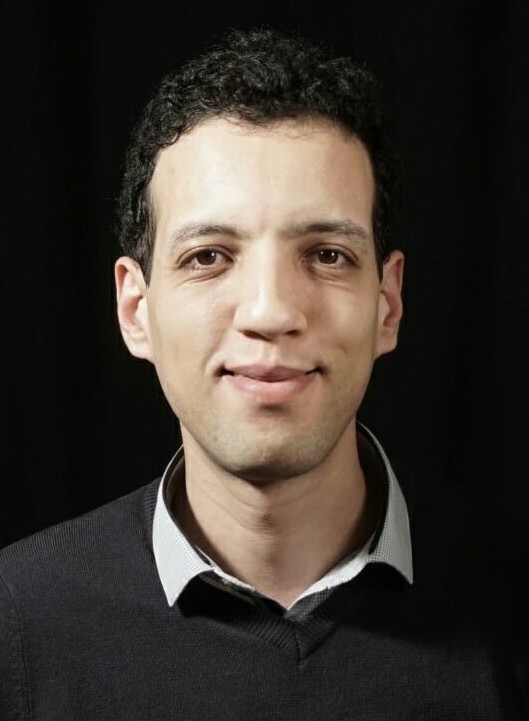
Mokrane Boudaoud
mokrane.boudaoud@sorbonne-universite.fr
Mokrane Boudaoud is Associate Professor (Maître de Conférences) at Sorbonne University, with research affiliation at Institut des Systèmes Intelligents et de Robotique (ISIR) where he leads the RPI-bio research group. He received the Engineering degree in Automatic Control from the University of Science and Technology of Algiers, and a MS degree in Mechatronics and Microrobotics at the University of Franche-Comté, France. He obtained in 2012 the PhD degree in Control Engineering at FEMTO-ST Institute. His research focuses on automatic control, dynamic system modeling, and microrobotics, with a particular emphasis on integrating robotics with advanced scanning probe microscopy techniques. His work particularly addresses the design, modelling and control of robotic systems operating at small scales with applications in precision manipulation, force sensing, and characterization of biological samples. He has coordinated and contributed to 11 national and European research projects in robotics and mechatronics since 2015. In addition to his research activities, he serves as Technical Editor for IEEE/ASME Transactions on Mechatronics and Associate Editor for Mechatronics (Elsevier). He has also served as Associate Editor for major international robotics conferences, including the IEEE/RSJ International Conference on Intelligent Robots and Systems (IROS).
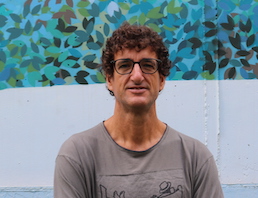
Gabriel Gomila
ggomila@ibecbarcelona.eu
Gabriel Gomila has got a PhD in Physics from the University of Barcelona (1997) with a thesis based on the theoretical modelling of electron transport at semiconductor interfaces. Later on, he was post-doctoral researcher at three different universities in Italy, France and Spain where he specialized in the theoretical modelling of nanoescale electronic devices. In 2001 he moved to the Department of Electronics at the University of Barcelona thanks to a Ramon y Cajal fellowship, where he expanded his research interests towards the merge of electronics and biological fields, thus focusing on microsystems for biological applications on-a-chip and on Atomic Force Microscopy for the electrical study of biological samples. In 2005 he became Associate Professor at the University of Barcelona and in 2008 Group Leader at IBEC, and in 2014 he was awarded with the ICREA Academia prize, which recognizes and promotes the research excellence of the university staff of Catalonia. Since 2017 he is Full Professor at the Department of Electronics of the University of Barcelona.
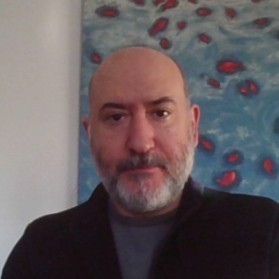
Fidel Bellmunt
fbellmunt@ibecbarcelona.eu
Fidel Bellmunt, IBEC’s Knowledge Manager at the Strategy Unit. He has a degree in Documentation from the Universitat de Barcelona. He has worked in knowledge management centers and projects in health sciences, both in the private and public sectors. At IBEC, he is mainly in charge of managing scientific production, publications and research data, both for internal exploitation and to achieve the objectives of open science.
Courses
| TW 3: Machine learning and Robotics for SPM and Open Science (SU, 4 days, Month 24) |
| C8. Automatic and Autonomous SPM – Robotics and Control Approaches (SU, 1.5 days): Scripting languages and automatic SPM operation. Examples of automatic operation. Automatic vs Autonomous operation. State-of-the-art in autonomous SPM operation powered by control and machine learning. |
| C9. Machine learning for SPM data analysis (IBEC, 1.5 days): Conventional vs machine learning data analysis. Image enhancing resolution. Segmentation, object recognition and tracking. Characterization of scanning artefacts and tip distortions. Functional imaging. IBEC develops machine learning algorithms for SPM image analysis. |
| N2. Open Science (IBEC, 1 day): Open access to research outputs. Early and open sharing of research. Use of open research infrastructures for data sharing. Open peer-review. Measures to ensure reproducibility of results. Open collaboration within science and with other knowledge actors. IBEC has implemented an Open Science policy. |
Program
| Mon 23 | Tue 24 | Wed 25 | Thu 26 | |
|---|---|---|---|---|
| 9:00 to 11:00 | C8: Automatic Control of SPM systems: Challenges, state of the art and perspectives (M. Boudaoud) | C8: Automatic vs Autonomous operation and Scripting languages for SPM operation (M. Boudaoud) | C9. Functional Imaging. Force curve map data processing. Nanomechanic mapping enhanced by AI (G. Gomila) | N2. Open Science: Open Access to Research Outputs. Measures to Ensure Reproducibility (Fidel Bellmunt) |
| 11:30 to 13:30 | C8: Robotics SPM systems: Expanding the operational degrees of freedom and automation capabilities of SPM systems (M. Boudaoud) | C8: State-of-the-art in autonomous SPM operation powered by machine learning (M. Boudaoud) | C9: Functional Imaging. Nanoelectric mapping enhanced by AI. (G. Gomila) | N2. Open Science: Open Collaboration within Science & Society (Fidel Bellmunt) |
| 14:30 to 16:30 | C9: Conventional vs machine learning data analysis. Image enhancing resolution. Segmentation, object recognition and tracking. Characterization of scanning artefacts and tip distortions (G. Gomila) |