
Researchers from the Clinical Biochemistry, Drug Delivery and Therapy Group at the Fundació Hospital Universitari Vall d’Hebron – Institut de Recerca (VHIR), including Vicenzo Montanarella, SPM4.0 Doctoral Candidate, recently took part in an educational activity organised through the ESCOLAB programme.
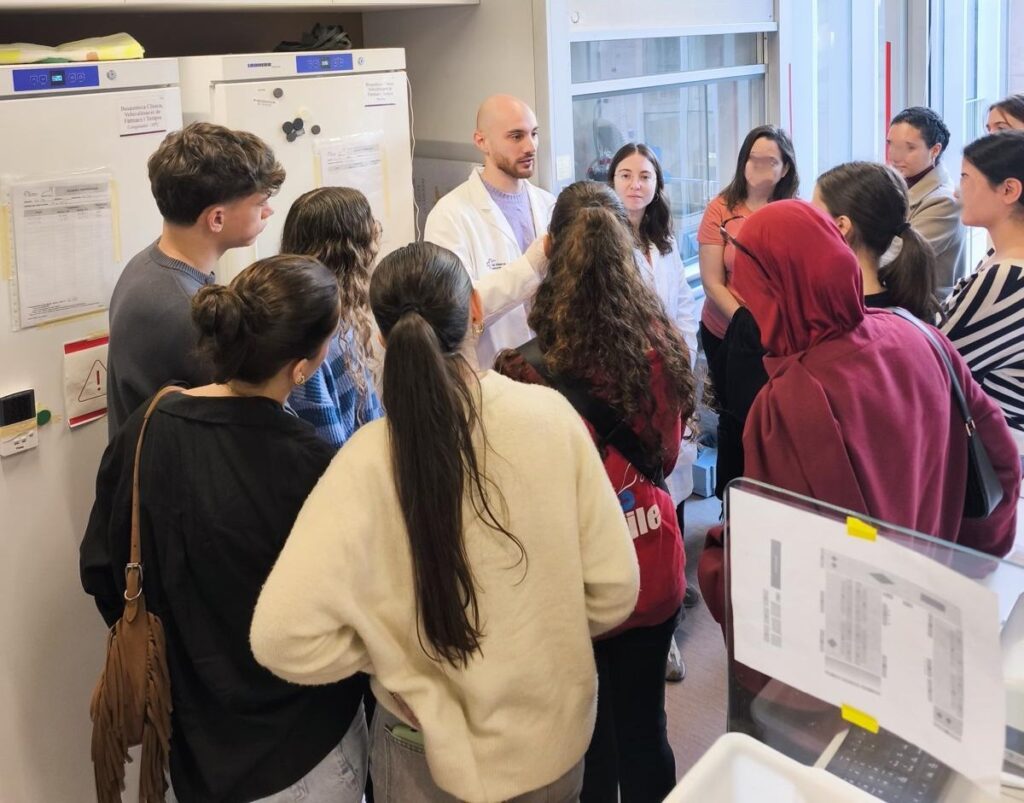
The ESCOLAB program, promoted by Barcelona City Council, creates opportunities for secondary school, vocational training and high school students to connect with the city’s research and innovation ecosystem. Through visits to research centres, universities and scientific institutions, students gain direct exposure to real research environments and can interact with scientists and technical professionals. By acting as a bridge between the educational and research communities, ESCOLAB helps foster scientific vocations and provides young people with valuable insights into future academic and professional pathways in science and technology.
On 18 December, VHIR welcomed 30 students from the Higher Vocational Training Programme at Alexandre Satorras Institute. They are students from the course “Biomedical and clinical laboratory”, concretely taking classes on haematological analysis techniques, clinical microbiology and immunodiagnostic techniques. The visit was designed to offer participants an overview of biomedical research and the diverse professional profiles involved in laboratory-based science.
Following an introductory presentation, the students were divided into two groups that alternated between guided tours of the research facilities and the wider VHIR campus. During the laboratory visits, researchers explained the group’s ongoing work, provided an overview of day-to-day research activities and discussed the different scientific and technical careers that contribute to advancing biomedical knowledge.
As part of the activity, Vicenzo Montanarella, SPM4.0 Doctoral Candidate, and other members of the Clinical Biochemistry, Drug Delivery and Therapy Group shared their experiences as researchers, offering students an insight into the challenges and opportunities of working in translational biomedical research. The sessions also encouraged dialogue, allowing participants to ask questions about research careers, laboratory practices and the development of innovative therapeutic approaches.
Initiatives such as ESCOLAB play an important role in bringing research closer to students and helping them understand the real-world impact of scientific careers, and participation of researchers like Vicenzo Montanarella reinforces SPM4.0 commitment to contribute inspiring the next generation of scientists and healthcare professionals.